

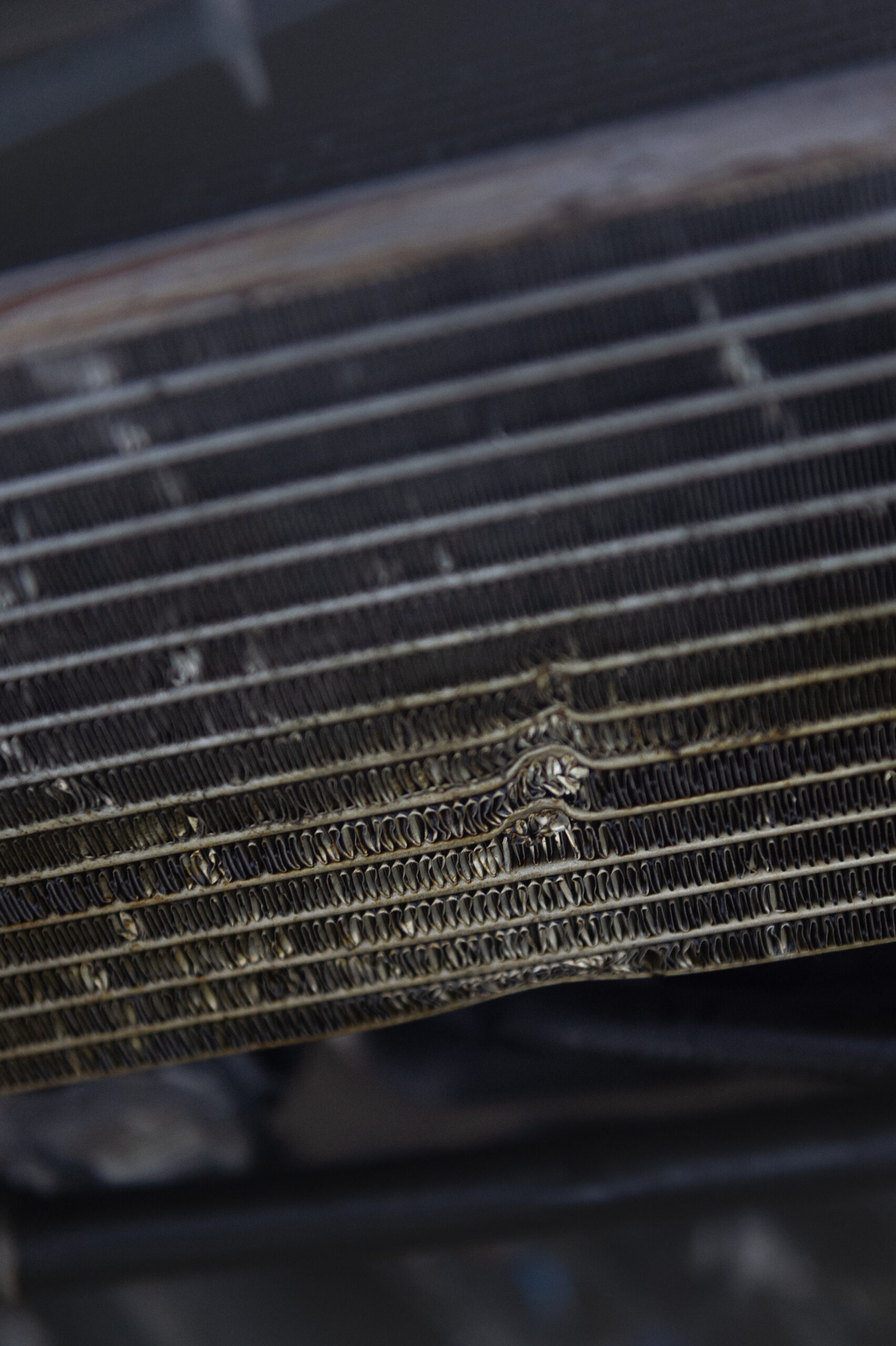
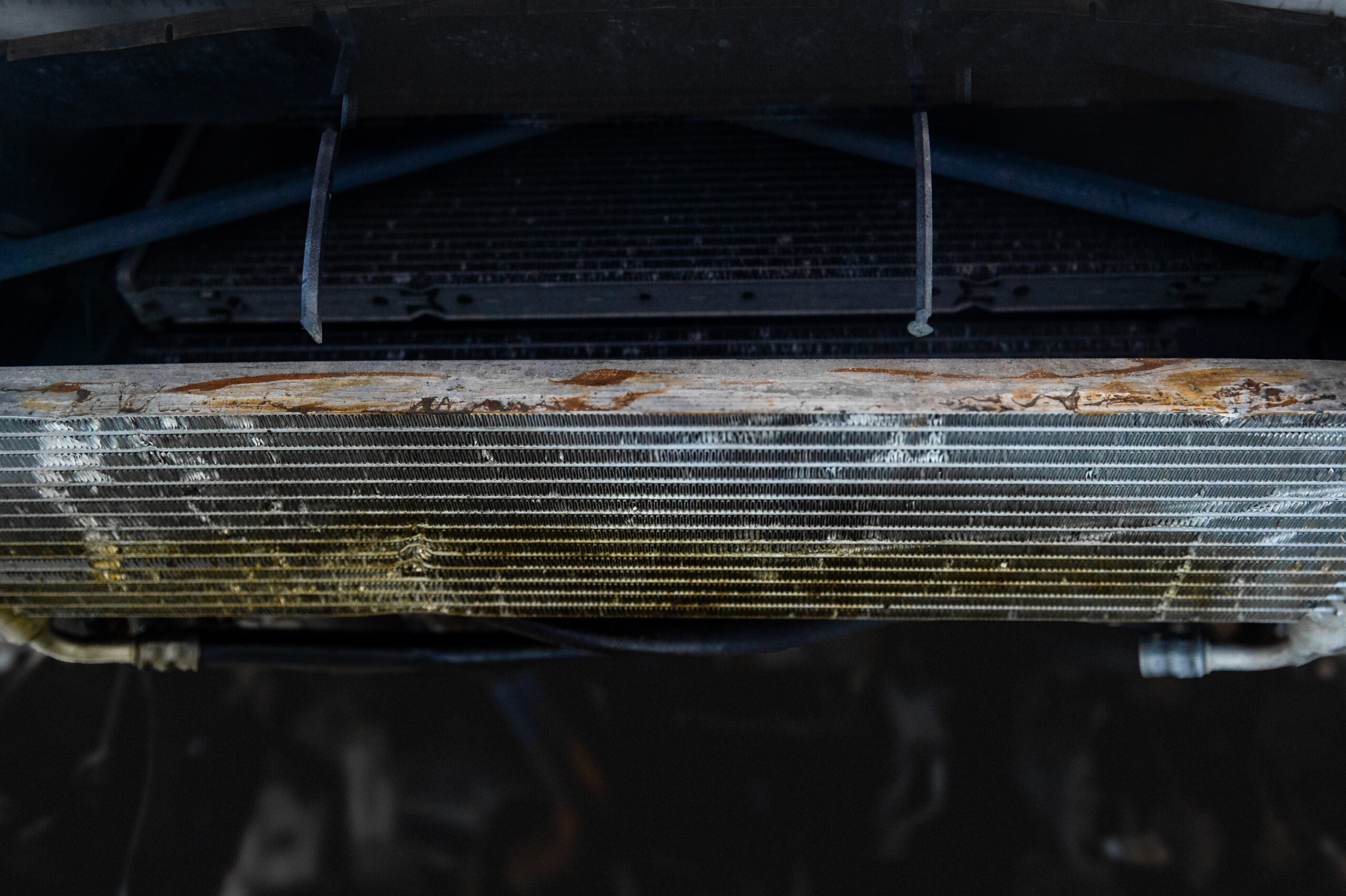
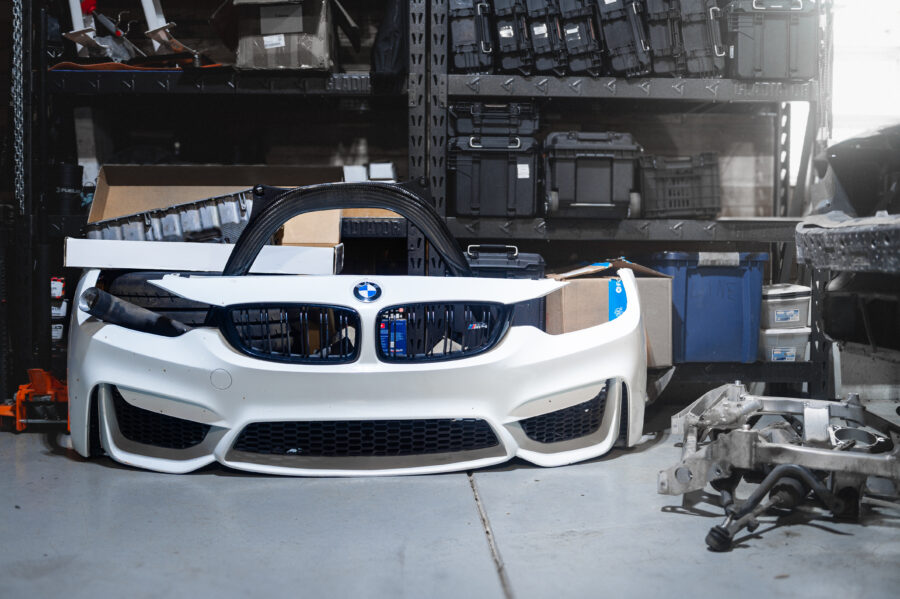
Judging by the first image, you would think that things aren’t going well. You’d be wrong; this is just part of routine maintenance for an S55. The oil pan gasket on these engines is legendary for leaking just like its predecessors. One thing that’s specific to the S55 cars is puncturing the oil coolers, so you know what, perfect timing. Since we’re getting close to our first test day, I figured this was a good time to document everything we’ve done so far and why I did it. I was at a funeral when I noticed an oil spot under the front bumper. Was this a metaphor for my faith in German Engineering?
Stop The Biggest Leak, The Oil Cooler
Here’s the thing: people don’t realize the F82 has six heat exchangers crammed in there. six. The oil cooler draws the short straw: it sits horizontally behind the radiator. It uses the pressure differential between the engine and the air moving under the shroud to pull airflow through. Honestly, it’s a clever design. The execution has some weak points. The plastic shroud over the cooler is so fragile that it’ll basically disintegrate if you look at it wrong, and the cooler fins themselves are just as fragile to road debris. Many people have lost their S55s because of a puncture, luckily I was spared. Having engine oil is of the utmost importance, so I turned to the aftermarket to fix these weak points.
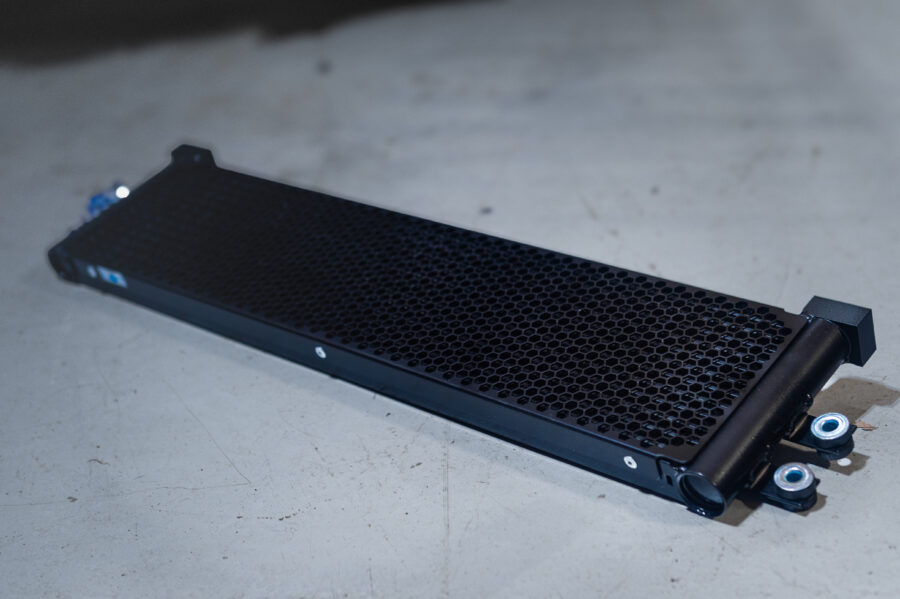
I went with CSF’s oil cooler. Sticking to my dual-purpose theme for this build, I wanted a cooler that was a direct bolt-in, kept the OEM inlet/outlet connections, and retained the factory rubber seals for airflow management. The CSF unit uses a much denser core of 32mm vs the OEM 28mm. CSF reduces fin height from 7mm to 5.4mm and uses a denser multi-louvered design. The theory is that by reducing the fin height, you increase the surface area while maintaining the same physical footprint. This change also increases the core’s volume by 15%, which is about .5 quarts of oil. I’m gaining reliability rather than adding cooling performance. Sure, the added volume should help slow the oil temperature rise while on track, but the OEM thermostat is still what controls when the oil cooler sees the fluid. Another factor that enhances reliability is that this cooler has a replaceable rock guard that mounts directly to the cooler. The goal of this mod is to maintain performance on track and avoid track/street debris taking me out of a weekend.
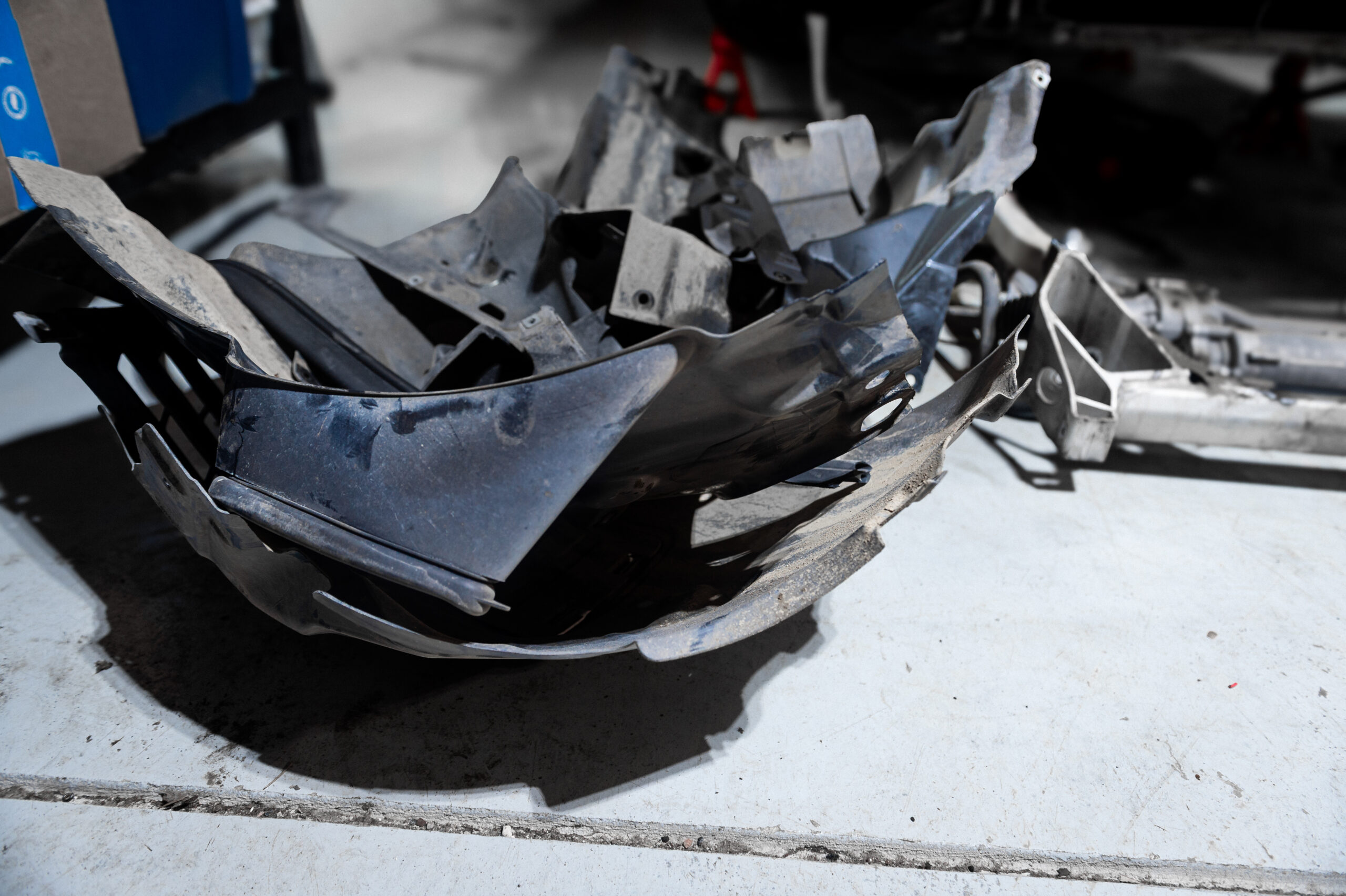
On top of that, I added a metal oil cooler shield. These ditch the flimsy OEM plastic shroud entirely, double as a light-duty skid plate, and add another layer of rock protection. The tax is 3–5 lbs on a 3,500+ lb car. Is it nothing? No. But it’s the same logic as a rollbar, it protects the thing I care about most: my S55. It’s a sacrifice I have to make.
Oil Pan Gasket
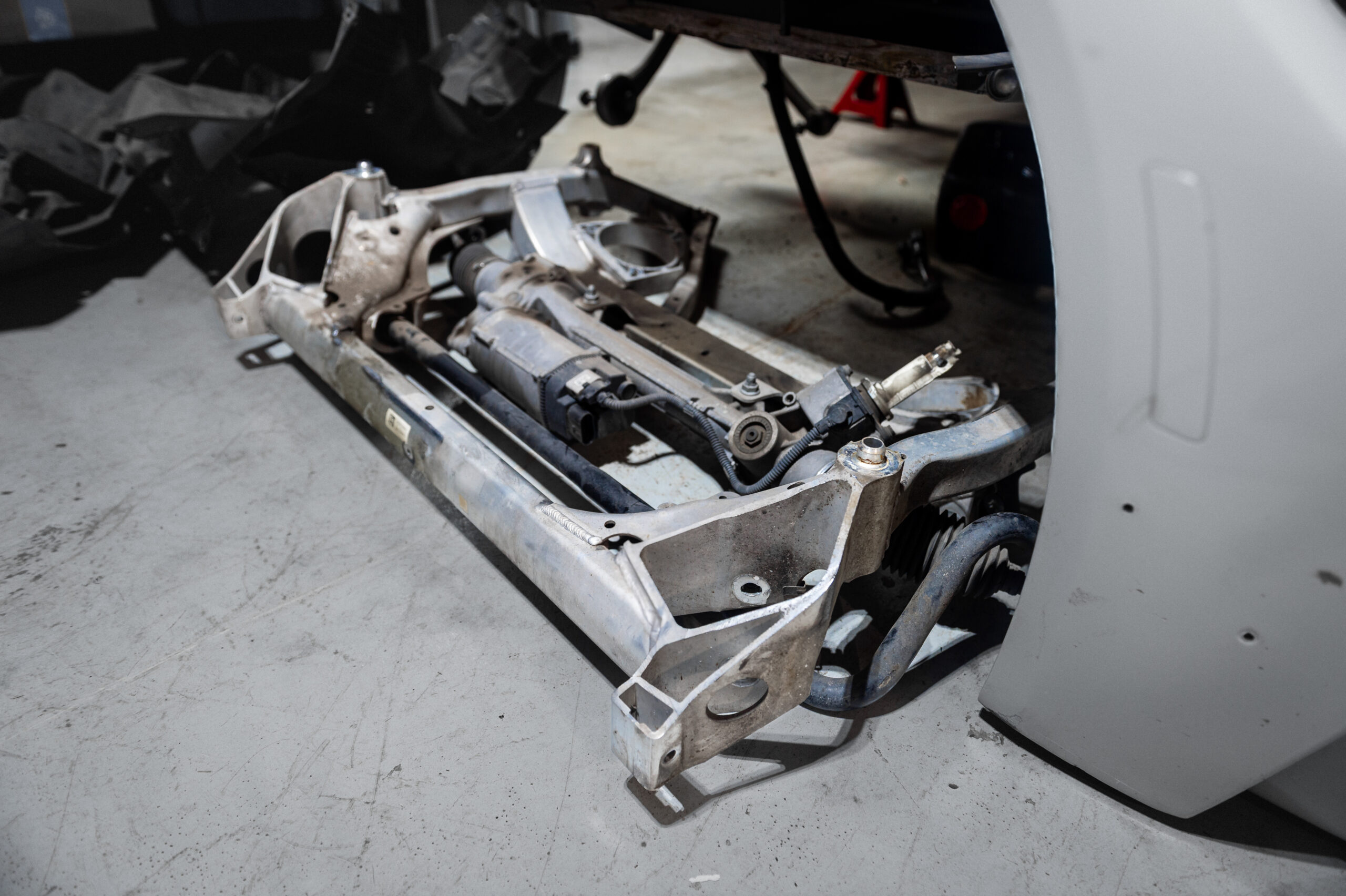
Not much to romanticize here. BMW has been shipping brittle oil pan gaskets for the last two or three generations. They dry out, they crack, they leak. BMW knows. BMW doesn’t care.
The front subframe has to come out to get to it, which sounds scarier than it is. On a rust-free car with an impact and loud music, I had it done in about 2 hours, thanks to the FCP Euro walkthrough. Look at me, the guy who just said removing front subframes “isn’t a big deal.” The “they aren’t too bad if you just maintain your BMW” has struck me.
Studs
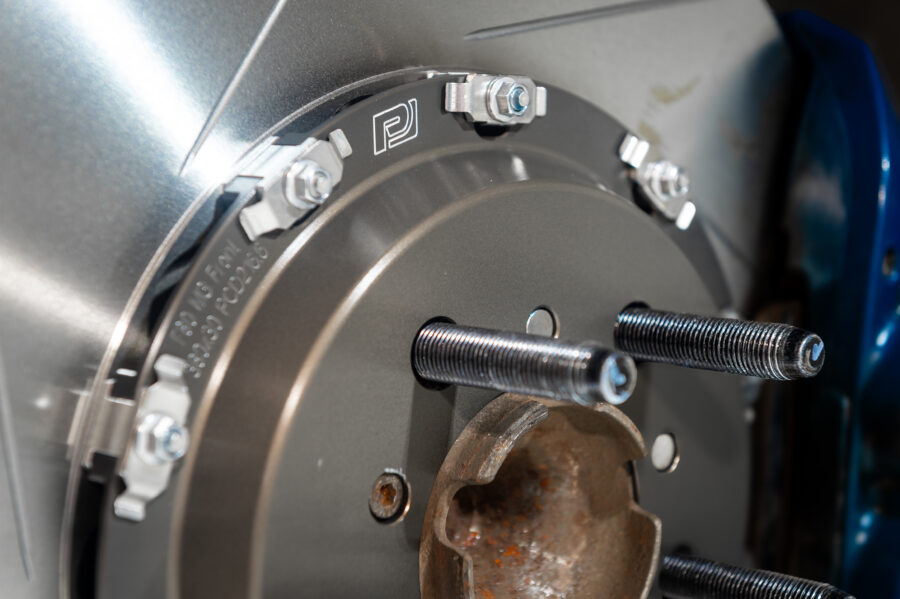
Mandatory on any German car, non-negotiable, end of debate. Wheel bolts are an active hate crime against anyone who’s ever had to swap wheels alone. Are you supposed to balance a heavy wheel with one hand while threading a bolt with the other? Who designed this? I went with Motorsports Hardware’s Endurance line, which converts the thread pitch from 14×1.25 fine thread to 14×1.50 coarse thread for better durability and fewer stripped lugs. They also have a bullet end, which is likely one of the reasons it’s their endurance line. For quicker wheel changes? That’s just my speculation. The downside, though, is that studs do have a life cycle, especially when I always use an impact. I’ll plan to replace these every two seasons.
Brakes
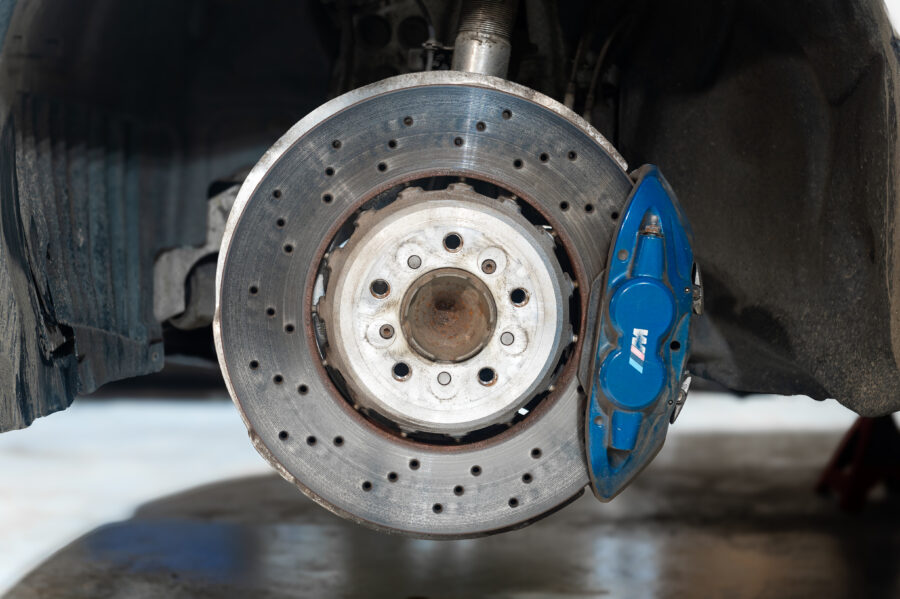
The OEM rotor is a 2-piece drilled design. Back in the day, drilled rotors were great for gas dissipation, but with modern pads, that advantage is nominal. There are only two other advantages I can think of at the moment: weight savings and driving in the rain. A layer of water can form on a rotor, and the drilled holes help evacuate it and give you a better initial bite. That specific scenario doesn’t happen often to care. All I see are the cons of drilled rotors: they are not as structurally sound as their slotted and blank brothers, meaning they are prone to cracking. Those drilled holes also reduce surface area, which slightly decreases efficiency in severe situations. I don’t know about you, but stopping a 500hp, 3500lb missile seems pretty extreme to me.
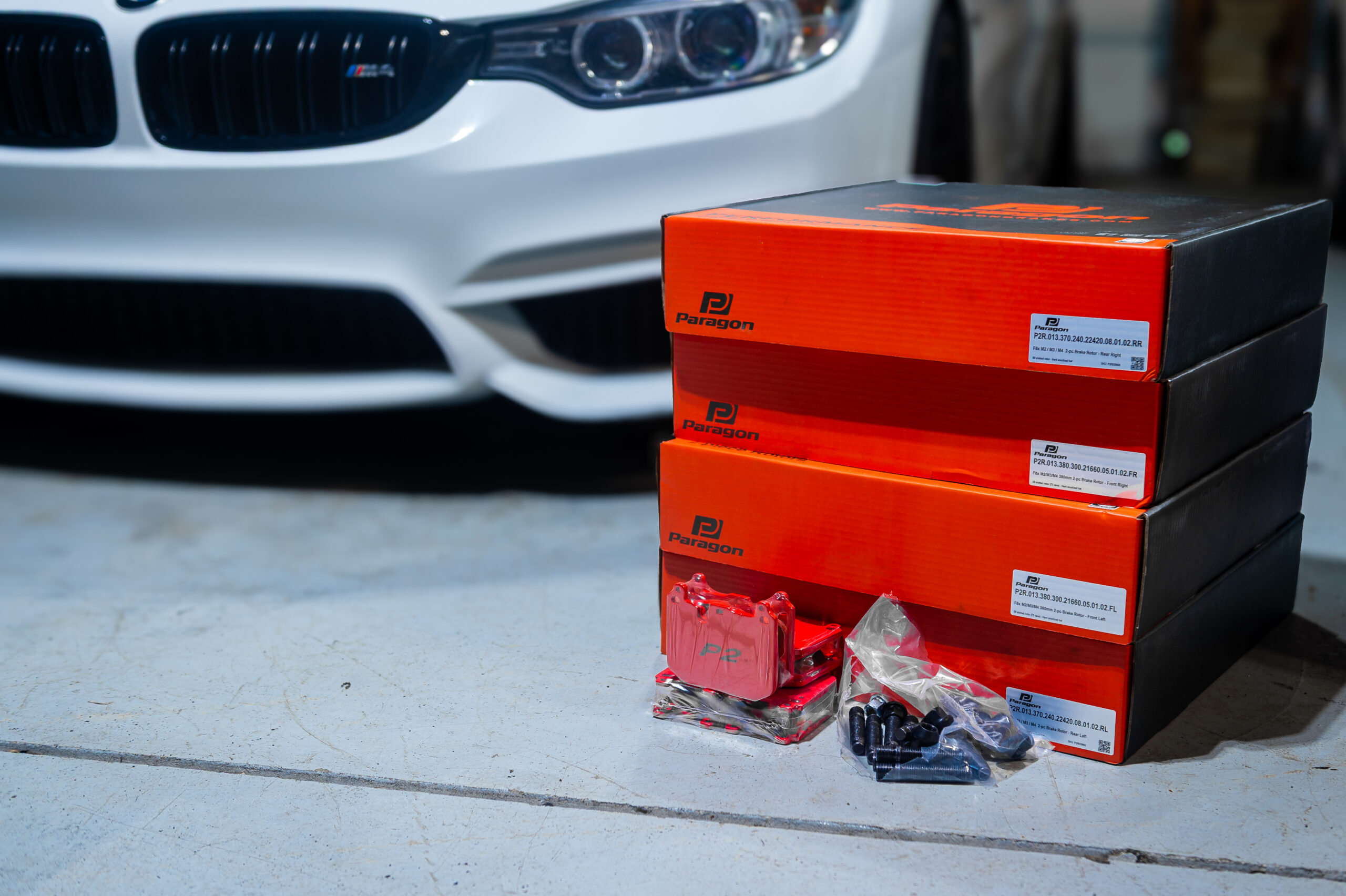
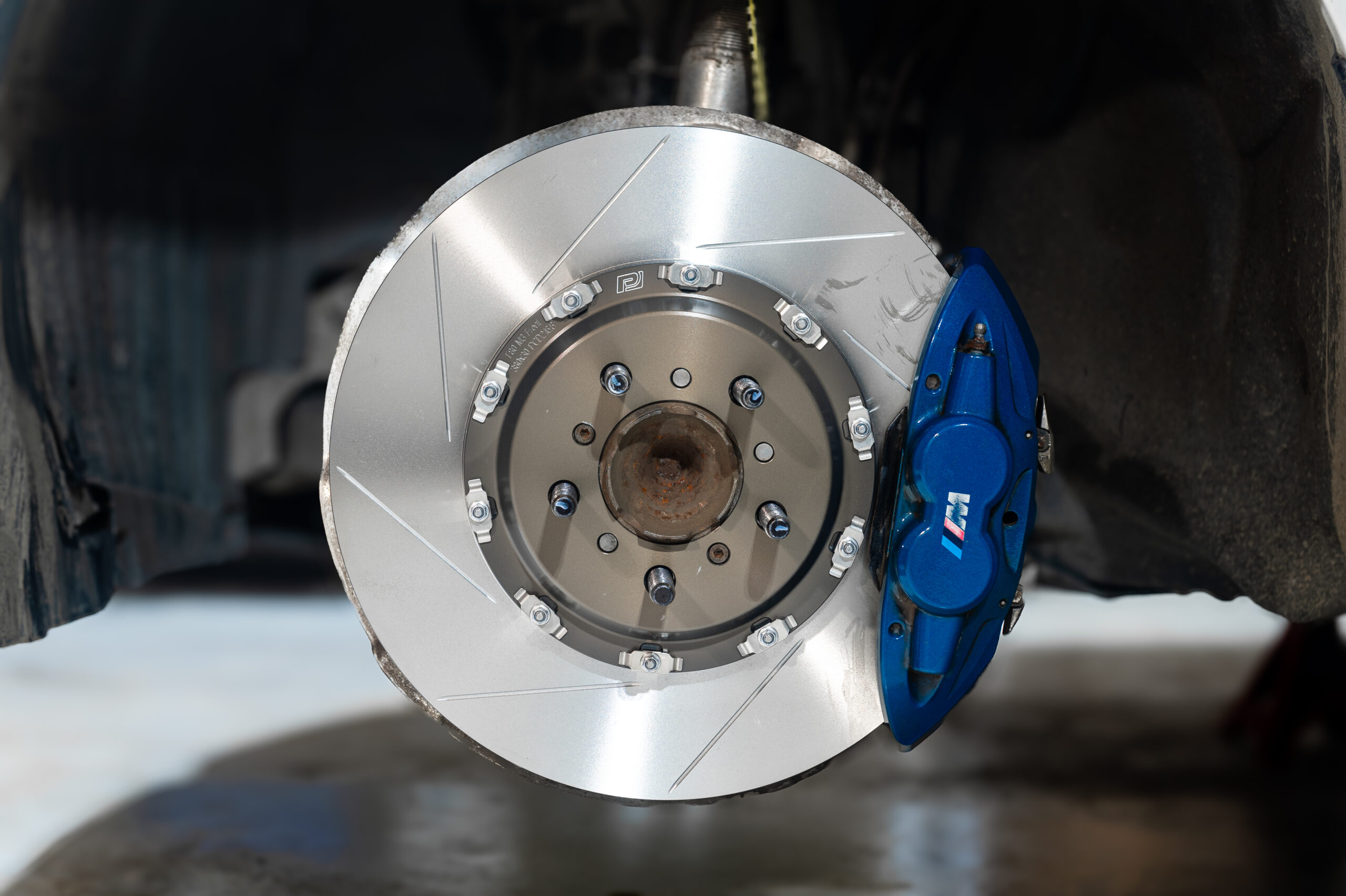
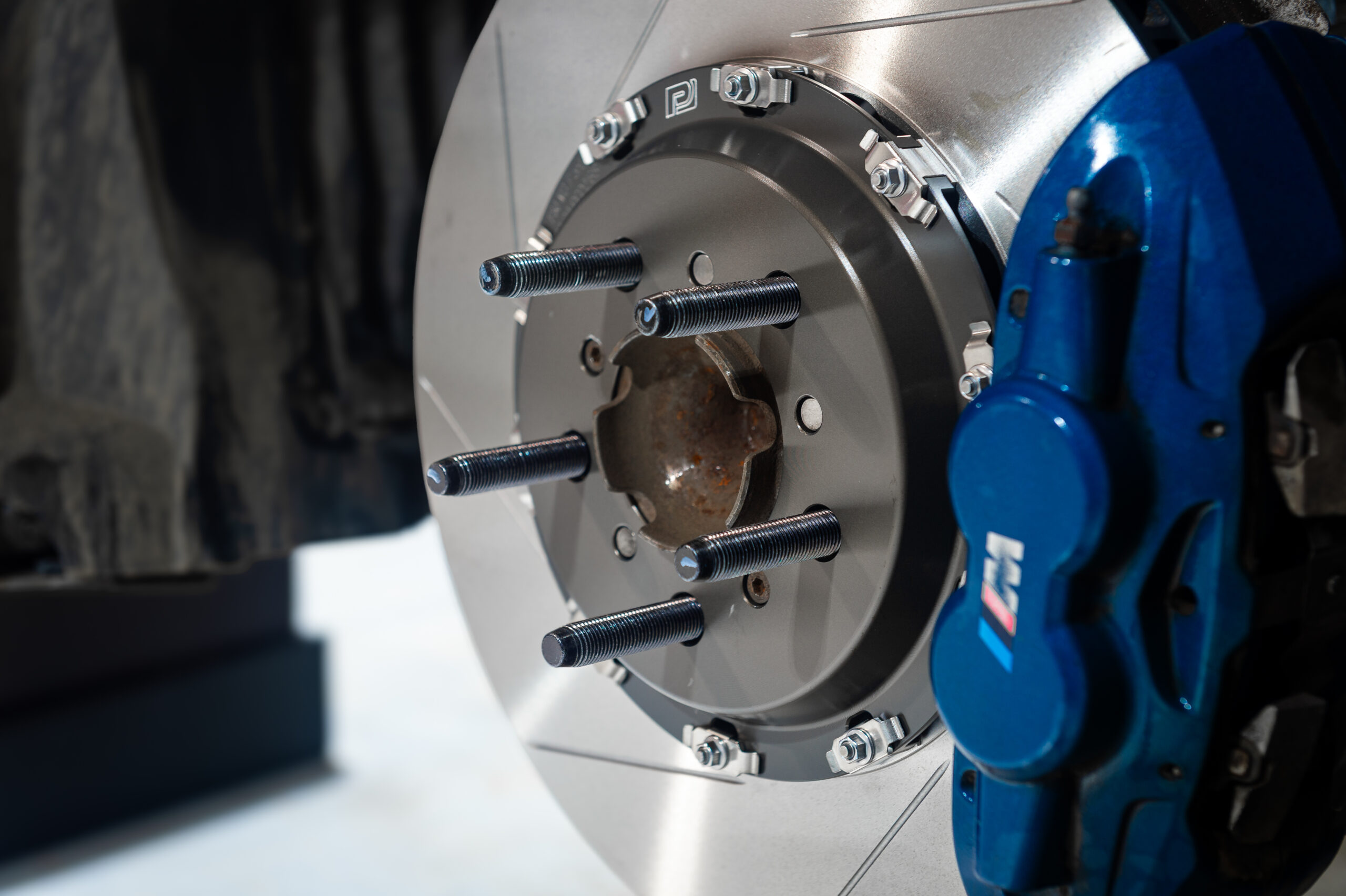
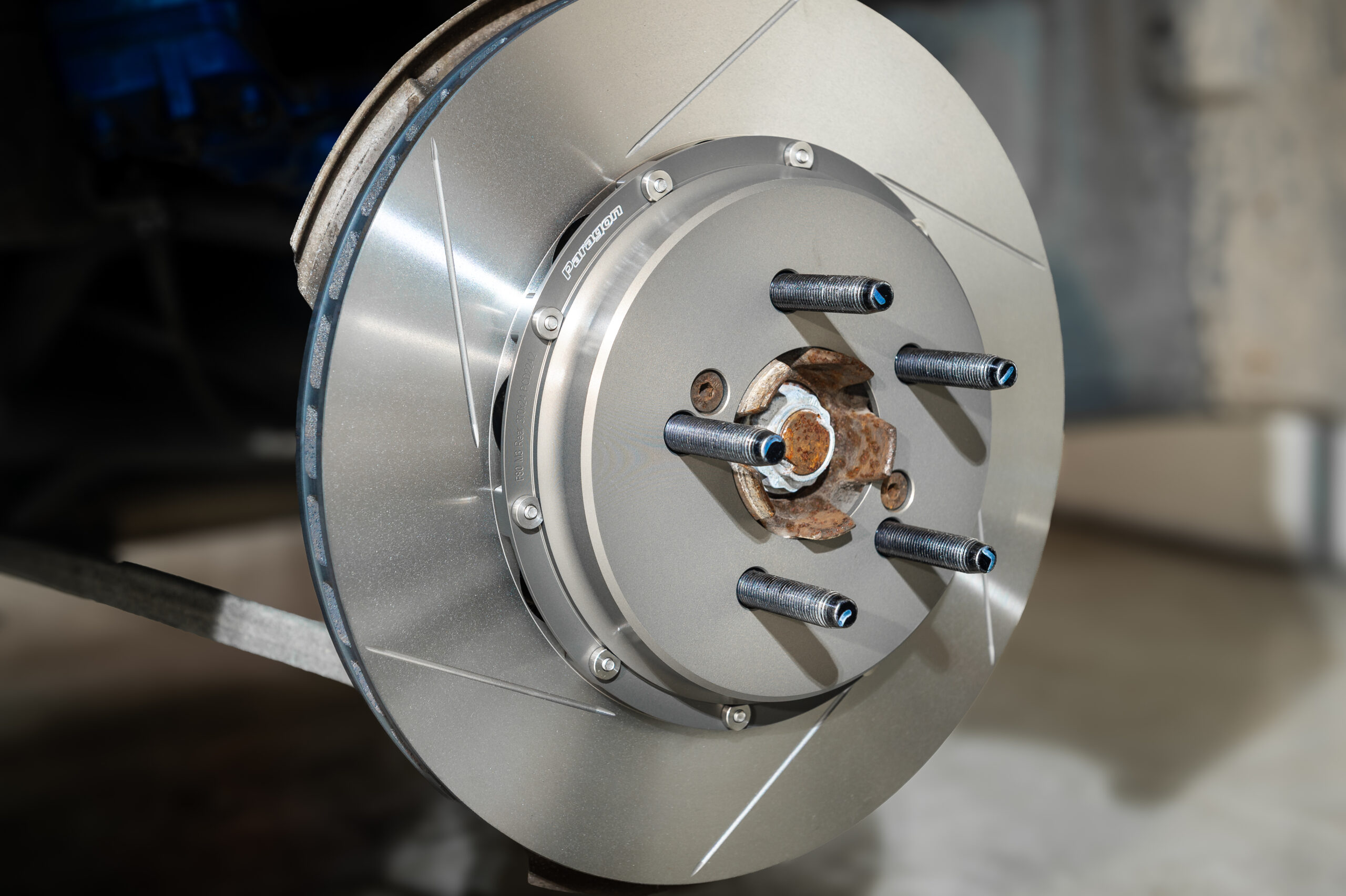
I jumped on this before it became a problem. I chose Paragon two-piece slotted rotors. I first found them when I was looking for titanium backing plates (if you don’t know why, read my Braking 101 here: https://www.professionalawesome.com/race-car-brake-system-upgrades/ ), and ever since, they have become my standard for baseline competition prep. Slotted rotors don’t create the stress points that drilled rotors do, so they are less prone to cracking. Slotted rotors also help with pad glazing prevention since the slots act as a scraper, constantly cleaning the pad surface. A bonus: you know when to replace the rotors when those slots disappear. Paragon rotors, specifically, are a true floating design, which means the iron rotor ring is allowed to expand and contract independently of the rotor hat. This further prevents deformation (warping) and cracking that can occur with one-piece rotors. Another bonus is that the cooler you keep that area, the longer lifespan you can get out of your wheel bearings. Paragon claims they run up to 30% cooler than OEM. I can’t verify this without owning thermal cameras, but cooler brakes, fewer cracked rotors, and longer-lived wheel bearings all point in the same healthy direction for my bank account.
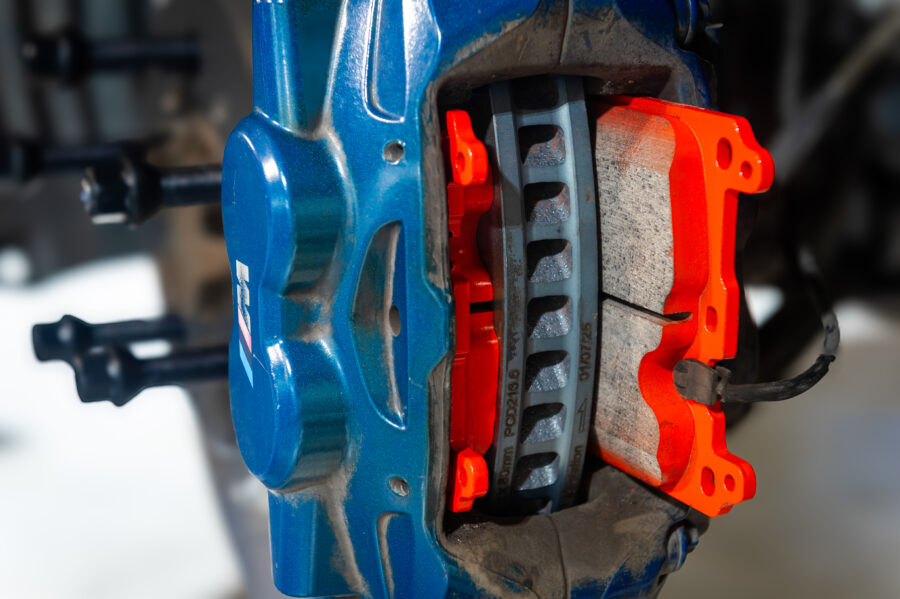
Fresh street pads are on, track pads are selected, and I’m running temp-indicating decals on the calipers so I can actually dial in the right compound instead of just guessing. That will have to come later on with the testing article.
What’s Now?
That’s the maintenance chapter closed. Or so I thought. While I was under the car, I got a good look at the crankhub, you know, the part that decides whether your S55 lives or grenades itself without warning. The previous owner says aftermarket. My eyes say otherwise. If it’s still the factory unit, this isn’t a ‘get to it eventually’ situation, it’s a ‘do not pass go, do not start the car’ situation. So the next article might not be the oil-and-filters housekeeping piece I planned. It might be a very different kind of story. Pray for me.
Go vote in the polls over at @imdevingiles. I actually read those, and they actually influence what I cover next. See you at the track…. or at least in the next article.