
Description
Protect the Splitter Before the Track Gets a Chance
Your splitter works in one of the harshest places on the car. Braking, suspension compression, curbing, surface changes, and the occasional off-track excursion can all bring the blade into contact with the ground.
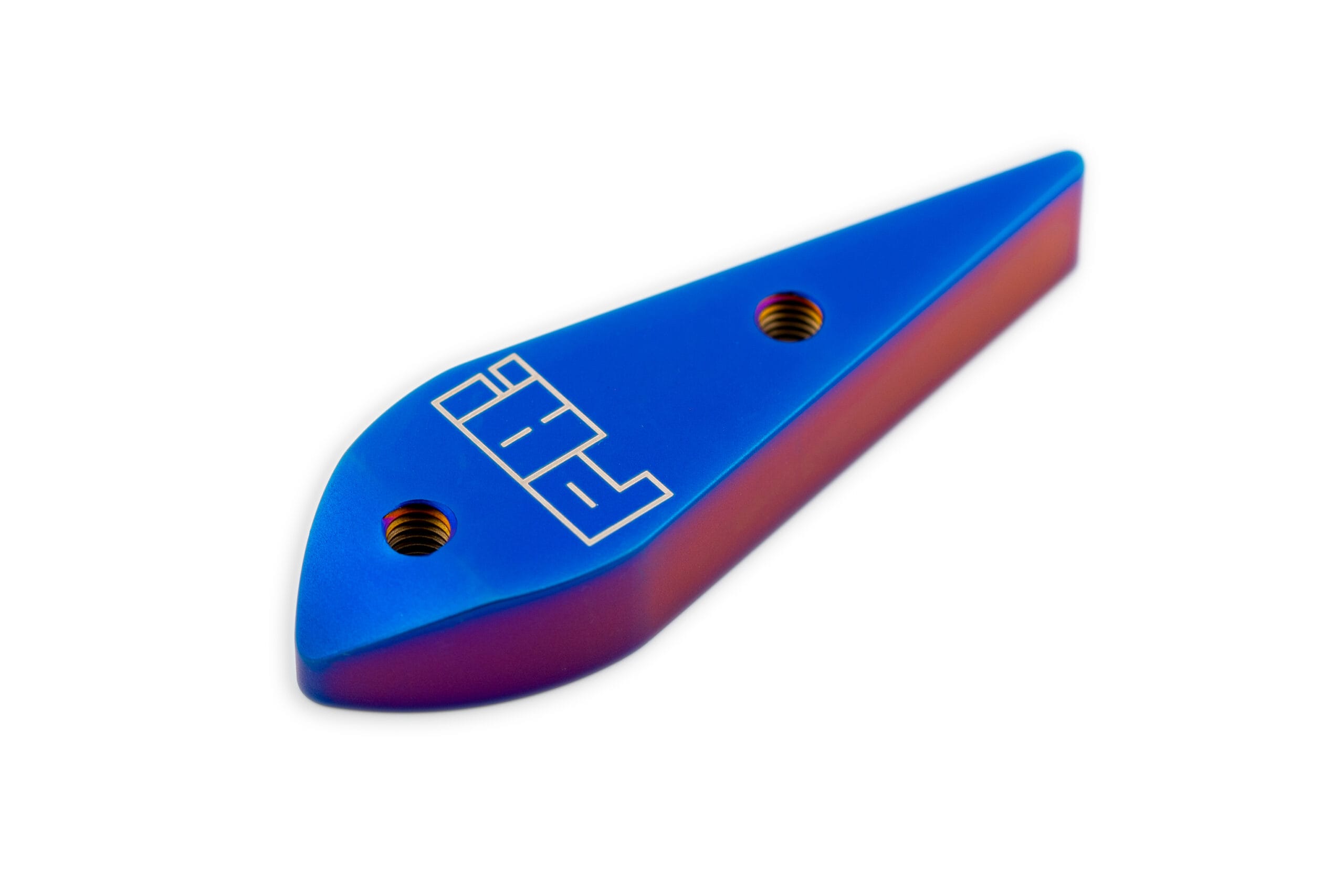
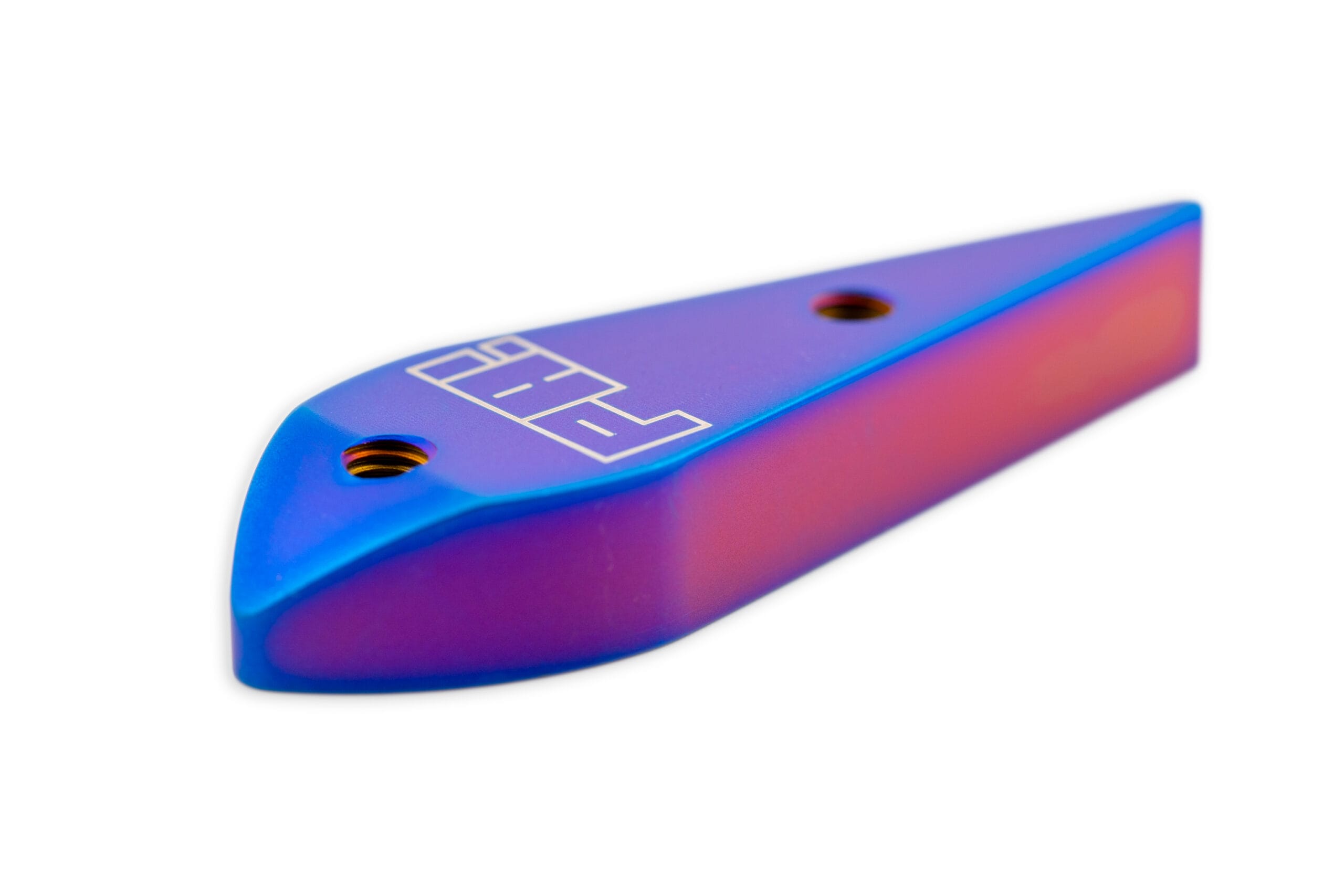
Professional Awesome Titanium Skid Blocks give the splitter durable, replaceable contact points where it is most likely to touch. They help keep the splitter blade itself away from the pavement and can reduce sudden airflow restriction when the car bottoms out. They will not make a splitter indestructible, but they give the track something far easier to replace than the blade.
The Short Version
- Sold individually so you can order the number your splitter actually needs.
- Most installations use 2 to 4 skid blocks.
- CNC machined from Ti-6Al-4V titanium.
- The shape was developed using CFD to reduce downstream airflow disruption.
- Compatible with common splitter materials when installed with hardware and load distribution appropriate for the blade.
- Customer-supplied M6 x 1.0 mounting hardware is required.
How Many Skid Blocks Do You Need?
Most splitters use 2 to 4 skid blocks, but there is no single layout that is right for every car. The goal is to put them at the places most likely to contact the track first.
- Near the front of the blade: These locations are commonly loaded during braking and suspension compression.
- Toward the outer leading edges: These areas are more likely to touch during cornering or when the car encounters curbing.
Look at the wear marks on your existing splitter, consider the car’s ride height and suspension travel, and place the blocks where they can protect the likely contact points without covering more of the underside than necessary.
Why We Use Titanium
Skid blocks have a rough job. They slide across abrasive pavement while seeing heat, vibration, and impact. We machine these blocks from Ti-6Al-4V titanium for its useful combination of strength, heat resistance, durability, and low mass in racing applications.
And yes, titanium produces bright sparks when it meets the track. That is the fun part. Protecting the splitter is the important part.
| Material | Ti-6Al-4V titanium |
|---|---|
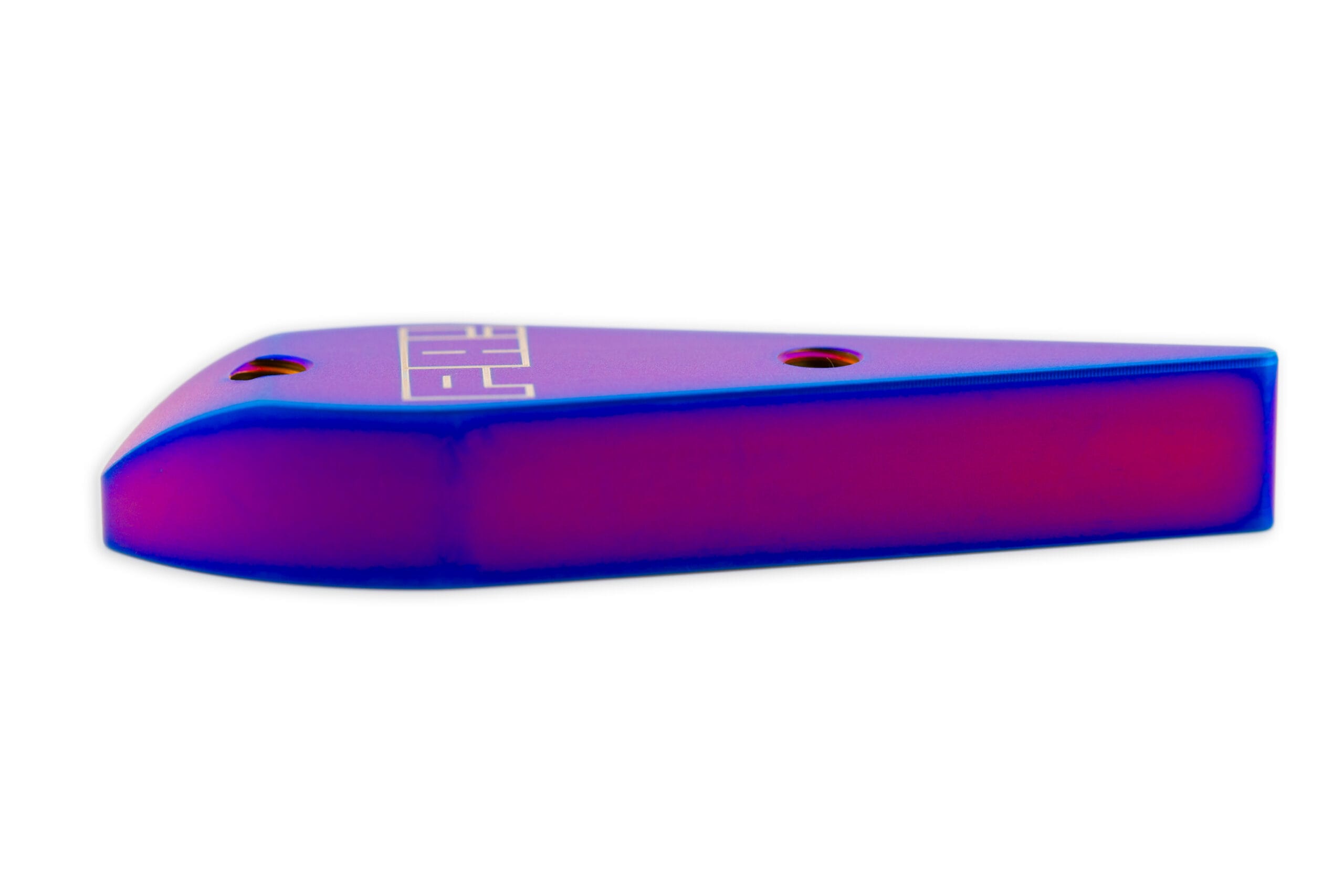
| Overall size | 3.25 inches long x 1 inch wide x 0.50 inch thick |
| Thread | Two M6 x 1.0 threaded mounting holes |
| Hole spacing | 1.5 inches center to center |
| Quantity | One skid block per order quantity |
Installing the Skid Blocks
Mounting screws and washers are not included. Each block requires two customer-supplied M6 x 1.0 screws. We recommend flat-head screws with countersunk washers for a low-profile upper surface and better load distribution.
- Choose the likely ground-contact points and confirm that the planned locations provide enough room for the complete skid block and mounting hardware.
- Mark and drill the two mounting holes at 1.5-inch center-to-center spacing.
- If the splitter blade has a core that can be crushed, install suitable spacers or crush sleeves so the fasteners cannot compress the blade. Use load-spreading hardware appropriate for the splitter construction.
- Pass the screws from the top of the splitter blade, through the blade, and into the threaded skid block below.
- Select screw length based on the complete blade and washer stack. Provide at least 6 mm of thread engagement inside the skid block without bottoming the screw or allowing it to protrude through the contact surface.
- Apply a small amount of Nickel Anti-Seize Lubricant to the clean screw threads. Wipe away any excess.
- Tighten the screws evenly using a lubricated torque appropriate for the selected hardware and splitter construction. Anti-seize changes the clamping force produced at a given torque, so do not rely on a dry-thread torque value.
The mounting arrangement must suit the splitter material, thickness, internal construction, and loads. If you are uncertain about drilling the blade or supporting a crushable core, ask the splitter manufacturer or a qualified fabricator before installation.
Inspecting Wear and Knowing When to Replace Them
Inspect the skid blocks and their mounting hardware before and after every track event. Check them again after any significant splitter contact, curb strike, or off-track excursion.
- Confirm that every screw remains secure and the blocks sit tightly against the splitter.
- Look for cracking, deformation, deep localized damage, damaged threads, or unusual wear.
- Measure at the thinnest worn area. Replace a block when approximately 6 mm of thickness remains, or sooner if it is damaged or can no longer be secured correctly.
Skid blocks are protective wear items, not a substitute for appropriate ride height and suspension control. If the splitter is making sustained or frequent contact, review the car’s setup rather than relying on the blocks to grind continuously.
A Quick Note About Sparks
Titanium skid blocks are commonly used in motorsports, but the sparks they produce still deserve respect. Confirm that titanium skid blocks are permitted by your track, event organizer, and racing series. Before running the car, correct any fuel or oil leaks and make sure no flammable material sits in the likely spark path.

What Is Included
- 1 CNC-machined Ti-6Al-4V titanium skid block for each quantity ordered
Not included: M6 x 1.0 mounting screws, countersunk washers, spacers or crush sleeves, and Nickel Anti-Seize Lubricant.
See Them on Real Splitters
Want ideas for placement? Browse the Professional Awesome Customer Install Gallery to see how other drivers have protected splitters across a wide range of cars and builds.




Reviews
There are no reviews yet.